
What Good SecFinOps Actually Looks Like
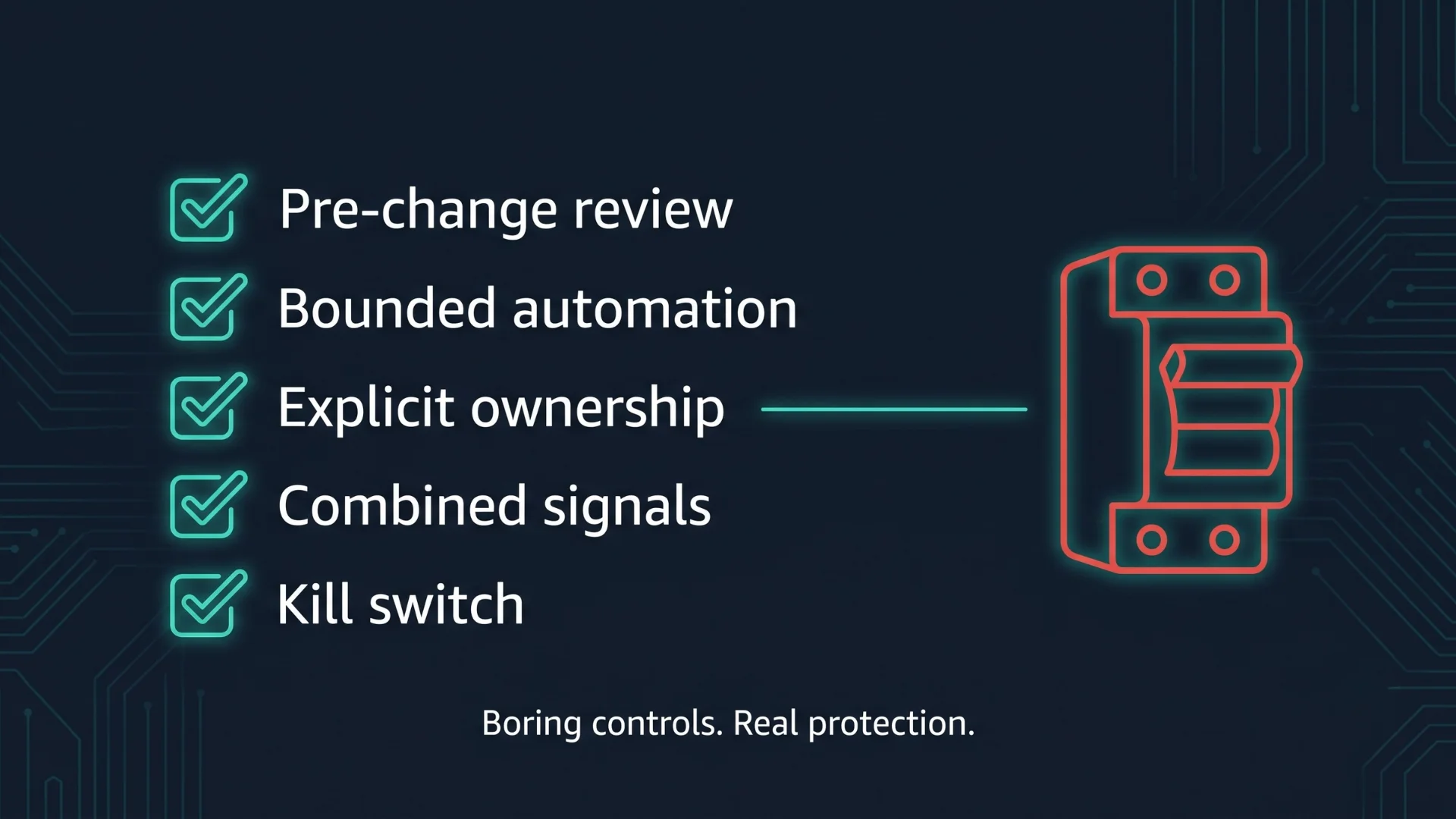
Good SecFinOps is not a dashboard and not a weekly cost meeting. It is an operating model with bounded automation, pre-change reviews, explicit ownership, and fast combined-signal response.

There is a recurring mistake in how teams talk about SecFinOps.
They treat it as a reporting layer:
- Another dashboard.
- Another meeting.
- Another way to correlate spend after the fact.
That is not what good SecFinOps looks like.
Good SecFinOps is an operating model.
You can tell whether it exists long before a monthly report is generated.
It Starts Before the Incident
Weak organizations first encounter SecFinOps at the invoice:
- Spend jumps.
- Someone scrambles.
- Security gets pulled in only if the pattern looks suspicious.
That is delayed correlation pretending to be discipline.
Good SecFinOps starts earlier.
It shows up in how teams design, approve, and bound cloud behavior before the incident exists.
That means the most useful signals of maturity are not dashboards.
They are operating habits.
Good SecFinOps Has Pre-Change Questions
Before a meaningful cloud change ships, someone should ask:
- what behavior could make this expensive at cloud scale
- what control failure would allow that behavior to repeat
- what signal would reveal the problem fastest
- who owns the response if the signal fires
These are not finance questions stapled onto engineering. They are design questions.
If nobody asks them before deployment, the organization is relying on detection to compensate for weak control design.
That can work for a while.
It is not maturity.
Good SecFinOps Uses Bounded Automation
Automation is where cloud value comes from.
It is also where cloud damage compounds.
So mature teams do not just automate aggressively.
They automate with boundaries.
That means event-driven workflows have clear input and output separation.
Retries are capped.
Concurrency is intentional.
Remediations have scope limits.
Permissions are narrow enough that one bug cannot create unlimited economic behavior.
This is why I keep returning to the same point: many of the best SecFinOps controls look like security architecture and reliability hygiene because those are the disciplines that determine whether the bill can run away.
Good SecFinOps Has Explicit Owners
A service owner is not only the person responsible for uptime.
In a strong operating model, they are also responsible for understanding the economic shape of the service and the security implications of how it behaves.
Not alone.
But explicitly.
That distinction matters.
If cost ownership lives only in a finance queue and security ownership lives only in a review queue, operational teams will keep making cloud decisions that no one truly owns end to end.
Good SecFinOps closes that gap by making the service boundary the unit of accountability.
Good SecFinOps Responds to Combined Signals
Mature organizations do not wait for a signal to become obviously financial or obviously security-related before acting.
They treat unusual cloud behavior as a combined-signal problem by default.
A meaningful response loop should be able to combine:
- a cost anomaly
- a service behavior change
- a configuration or identity event
- a logging or data-volume shift
into one incident view quickly.
If those signals are reviewed in separate silos and only stitched together later, the organization still operates as if cost and security are different universes.
The cloud does not behave that way.
Neither should the response model.
Good SecFinOps Has Kill Switches
This is one of the clearest maturity markers.
When a workflow goes wrong, can the team stop the behavior fast?
Not write a retrospective.
Not escalate a finance email.
Actually stop the behavior.
That could mean concurrency caps, deployment circuit breakers, scoped rollback paths, scheduled shutdowns, permission boundaries, or clean ways to disable a trigger without destabilizing unrelated systems.
If the answer is no, the organization may have visibility, but it does not have control.
Good SecFinOps requires both.
It Looks Boring From the Outside
This is worth saying plainly.
Good SecFinOps does not look flashy.
It looks like:
- clear pre-change review questions
- bounded automation
- explicit service ownership
- anomaly baselines that match real workloads
- fast combined-signal triage
- kill switches that actually work
That sounds almost ordinary.
It should.
Operating models that survive real incidents are usually less glamorous than the software categories built around them.
The Simplest Test
If you want to know whether a company has good SecFinOps, ask a practical question.
When cloud spend rises sharply because of a behavioral change, who can explain the runtime cause, the security implication, and the fastest stopping action in the same conversation?
If the answer is unclear, the company may have observability.
It may have FinOps.
It may have security tooling.
But it does not yet have good SecFinOps.